
Your Data Is Only As Good As What You Do Next
From Dirt to Data | Where real science meets real impact. By Leah Pinto, M.Sci.Ed — Director of School Success, EduSmart
The rainbow grid
I used to keep what I called a rainbow grid.
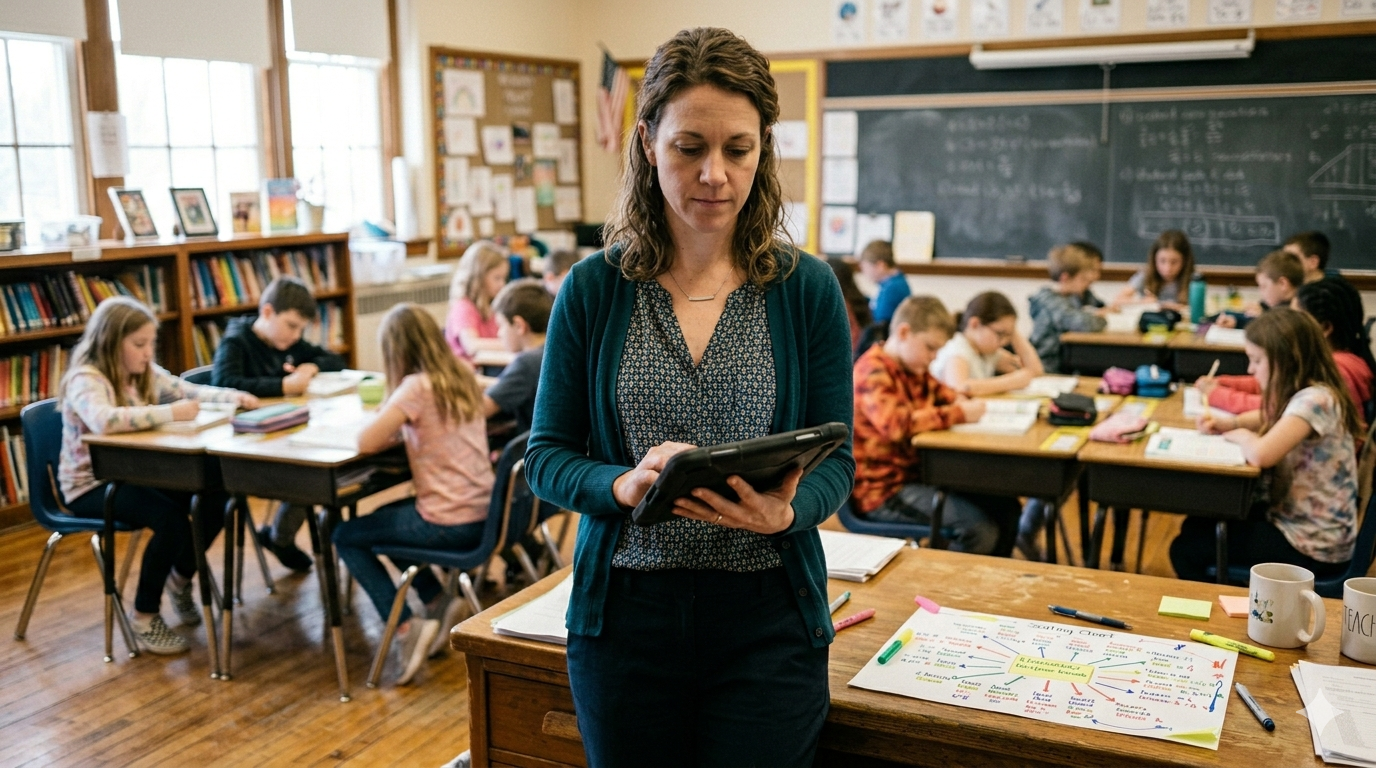
It was my seating chart. But every desk was highlighted in a different color — each color representing a different layer of need, support, accommodation, or context for the student sitting there. Special education services. English learners. Gifted and talented. Students managing diabetes or asthma. Students carrying trauma. Students who needed modified assignments. Students who needed extension work. Students who just needed someone to notice them when they walked in the door.
In one classroom. Every day. Before the science lesson even started.
I did not build the rainbow grid because someone asked me to. I built it because I needed to see my students all at once — to hold the full picture in my head before I made a single instructional decision. Which student needed me beside them today. Which student was ready to go further. Which student was about to hit a wall with the concept we were starting and would need something different before the end of the period.
The rainbow grid was data. But it was not data for a report. It was not data for a dashboard. It was not data to prove that learning had happened.
It was data to decide what to do next. That distinction is everything.
The problem with most EdTech data
Here is what the majority of educational technology platforms give teachers: completion rates, time on task, scores. Sometimes a color-coded heat map of which students are behind. Occasionally a suggested next step that may or may not connect to what the teacher is actually doing in the room.
More dashboards. More reports. More things to log in and interpret and try to translate into a Monday morning instructional decision while also taking attendance and answering a parent email and preparing for a campus observation.
More data is not the same as better decisions.
In fact, more data — without the structure to make it actionable — does not support teachers. It buries them. I have watched teachers disengage from data tools entirely — not because they do not care about their students, but because the tools gave them information without giving them anything useful to do with it. A dashboard that tells you a student scored 42% on an ecosystem standard does not tell you what the student actually misunderstands. It does not tell you whether the misconception is foundational or peripheral. It does not tell you whether this student needs you beside them tomorrow or whether they just need one more practice opportunity.
A number is not intelligence. A number is just a number. Instructional intelligence is knowing what the number means and what to do about it.
What closing the loop actually looks like
Real closing-the-loop data does four things that most platforms do not:
- It is concept-specific, not just score-based. It tells you not just that a student got something wrong but what they actually think — what misconception they are carrying, where their reasoning broke down, what they understood and what they missed. That is the difference between a grade and a diagnosis.
- It is immediate. By the time a benchmark report is generated, sorted, analyzed, and turned into a reteach plan, two weeks have passed and the class has moved on. Instructional data is most useful when it is available in time to change what happens tomorrow — or even what happens in the next fifteen minutes.
- It connects directly to the next instructional move. Not a suggested resource from a library of hundreds. Not a generic remediation path. A specific, actionable signal: this student needs direct instruction here. This group is ready to move forward. This misconception is showing up across your whole class and needs a whole-group reset before you go further.
- It keeps the teacher in the driver's seat. The data informs the decision. It does not make it. A teacher who knows her students will always bring context that no algorithm can replicate. The best data tools amplify that judgment. They do not replace it.
The rainbow grid, reimagined
What I wanted when I was in the classroom — and what I have spent years helping build at EduSmart — is a version of the rainbow grid that updates in real time.
Not a static snapshot of where students started. A living picture of where they are right now, what they are thinking, where they are stuck, and what they need next.
When a student works through a Coach Hootie intervention session, the interaction does not just produce a right or wrong answer. It produces a dialogue. A record of how the student reasoned. What scaffold they needed. Whether they got there with one question or four. Whether they disengaged or pushed through. Whether they demonstrated understanding or just found their way to the correct choice.
That is not a score. That is instructional intelligence.
And it goes directly to the teacher — not as a report to file, but as a signal to act on. This student is ready. This student needs you. This group shares a misconception that your direct instruction tomorrow should address. This student who has been flying under the radar just showed you something surprising and worth building on.
The loop closes. The teacher decides. Instruction moves forward. Dirt — the real engagement, the messy thinking, the productive struggle — becomes data. And data, when it is the right kind, becomes the decision that moves a student forward.
What districts should be asking their EdTech partners
Not: How much data does this platform generate?
But: What does a teacher actually do differently on Monday morning because of what this platform showed her on Friday afternoon?
That is the question worth asking. And the answer tells you everything about whether a tool is generating noise or generating intelligence.
The rainbow grid was never about the colors. It was about the decisions the colors made possible. That is still the goal.
Ready to see what actionable instructional data looks like?
EduSmart's science platform gives teachers real-time, concept-specific signals — not just scores. Built for K–12 science, aligned to TEKS and NGSS.
Start Your Free Trial →
Leah Pinto is the Director of School Success at EduSmart and has spent her career at the intersection of science education, instructional design, and learning technology. From Dirt to Data is where she thinks out loud about what it actually takes to move science learners forward.